Work

Three sites. One solution. Migrating from Wordpress to Umbraco.

Client

Bedord

Industry:

Services:

Turning up the speed and performance for a manufacturing migration: how we made Bedford faster and easier to maintain.

On the web, speed is important. Optimizing for speed, accessibility, and structured content helps make your website — and, as a result, your content and messaging — more usable and findable, which means your site is more likely to be effective.

This was Bedford Industry’s concern when they came to Blend asking for help — their Wordpress sites were struggling to perform. Compared to industry competitors and contemporaries, Bedford’s site was sluggish and slow to load — an issue that industry wide has been proven to not just cause frustration, but actively discourage browsing and decrease sales.

Bedford needed a strategic partner to help them understand what was working, what wasn't, and chart a path forward that would consolidate their web presence without disrupting their business operations. So we got to work.

Three sites. One major problem.

Bedford Industries manufactures twist ties, bag closures, and product identification solutions for packaging applications. Three of their sites — the main Bedford Industries site, Close It, and Tagback — each operated on different systems with varying levels of performance, accessibility, and editor experience. This fragmented approach created maintenance headaches, inconsistent user experiences, and made it difficult for Bedford's team to efficiently manage content across their product portfolio.

Bedford needed a strategic partner to help them understand what was working, what wasn't, and chart a path forward that would consolidate their web presence without disrupting their business operations.
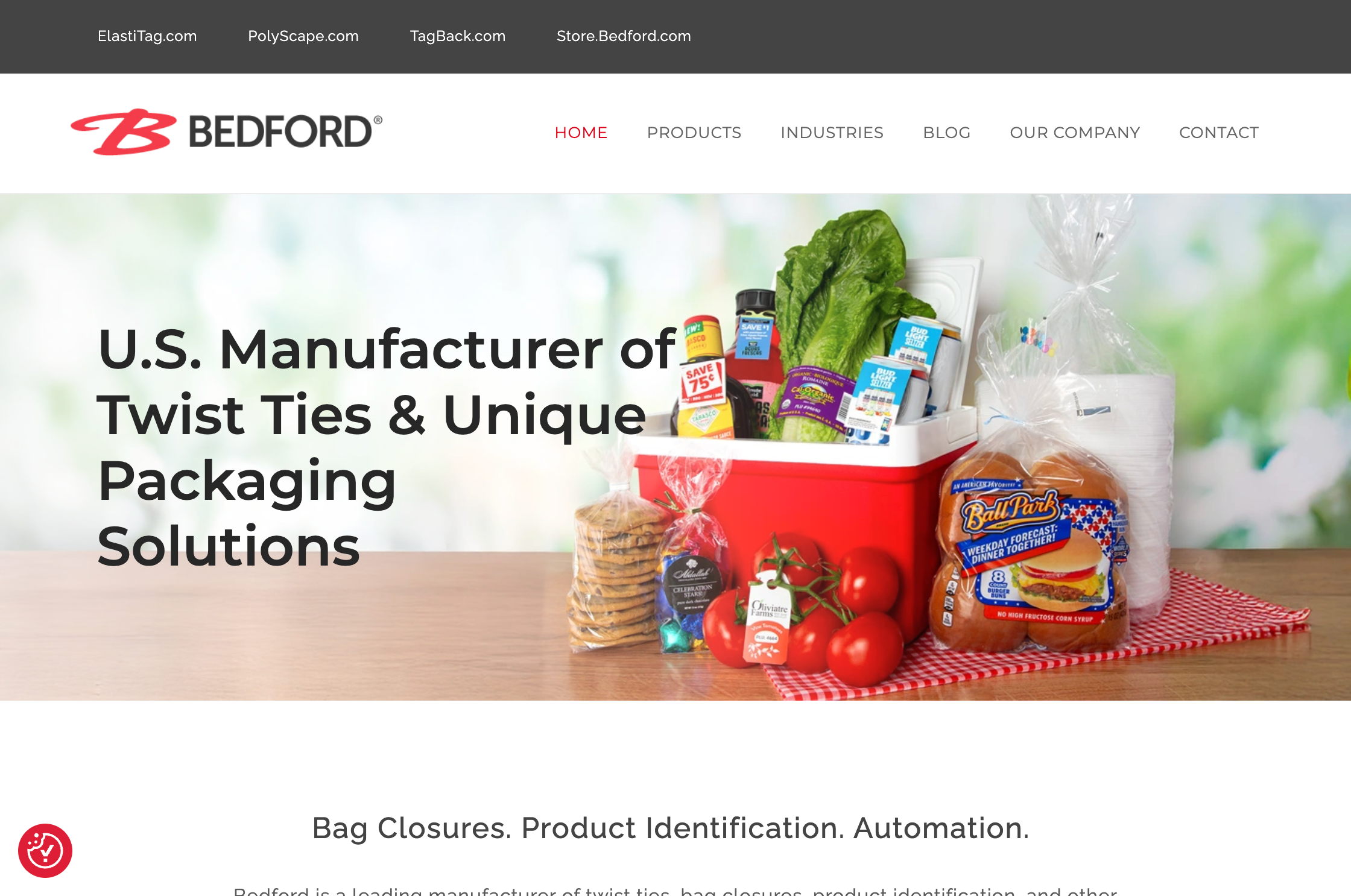

Screen shot of the Bedford's updated home page at desktop width. Screen shot of the Bedford's updated home page at mobile width.

Moving Bedford to Umbraco allowed for a stricter content model and improved performance.

Our approach.

Blend structured the engagement in two distinct phases, allowing Bedford to make informed decisions before committing to major implementation work.

Phase one: discovery and strategic planning.

Before touching any code, we conducted comprehensive audits and research to understand Bedford's current state and future needs. This included:

  • Accessibility and performance audits to help establish a baseline and identify critical improvements
  • A virtual workshop with Bedford's team to align on business priorities and understand editor pain points
  • Stakeholder interviews across several groups to ensure all voices informed the strategy
  • User testing scenarios to validate whether the sites were delivering the intended experience
  • Creation of a prioritized backlog that balanced impact against effort, giving Bedford a clear roadmap forward

This discovery phase revealed that consolidating all three properties into a single Umbraco CMS would significantly reduce maintenance burden while improving the editor experience — a recommendation that shaped the entire second phase.

Phase two: migration and implementation.

With a clear roadmap in hand, we executed a budget-conscious migration that prioritized getting a new Bedford site up and running without a major overhaul of the current branding. 

First, we determined the core issue with site speed was due to Wordpress and all of its associated plugins. Our recommendation was to move toward a more custom CMS implementation — in this case, Umbraco. While a full CMS migration is not always the most simple of tasks, shifting to a new CMS also allowed us to take care of several other ongoing issues, including a more purposeful look at custom functionality (at the time handled by those heavy Wordpress plugins) and better standardization of the overall design model.

Design was given a hard look for consistency and reuse, maintaining existing design and brand identities rather than pursuing a full redesign. Rather than rebuild all three sites, we integrated Close It and Tagback into the existing Bedford design system.

Building this on Umbraco made the editorial process easy — while automated migration was used where structured content was present, Bedford themselves used the content entry process to train, test, and get familiar with the new Umbraco site. Features were determined by our priority-based scoping process, which keeps overall budget in mind while determining whether features are launch-critical or good for a later phase.  This approach meant Bedford always knew where they stood and could make informed decisions about prioritization.

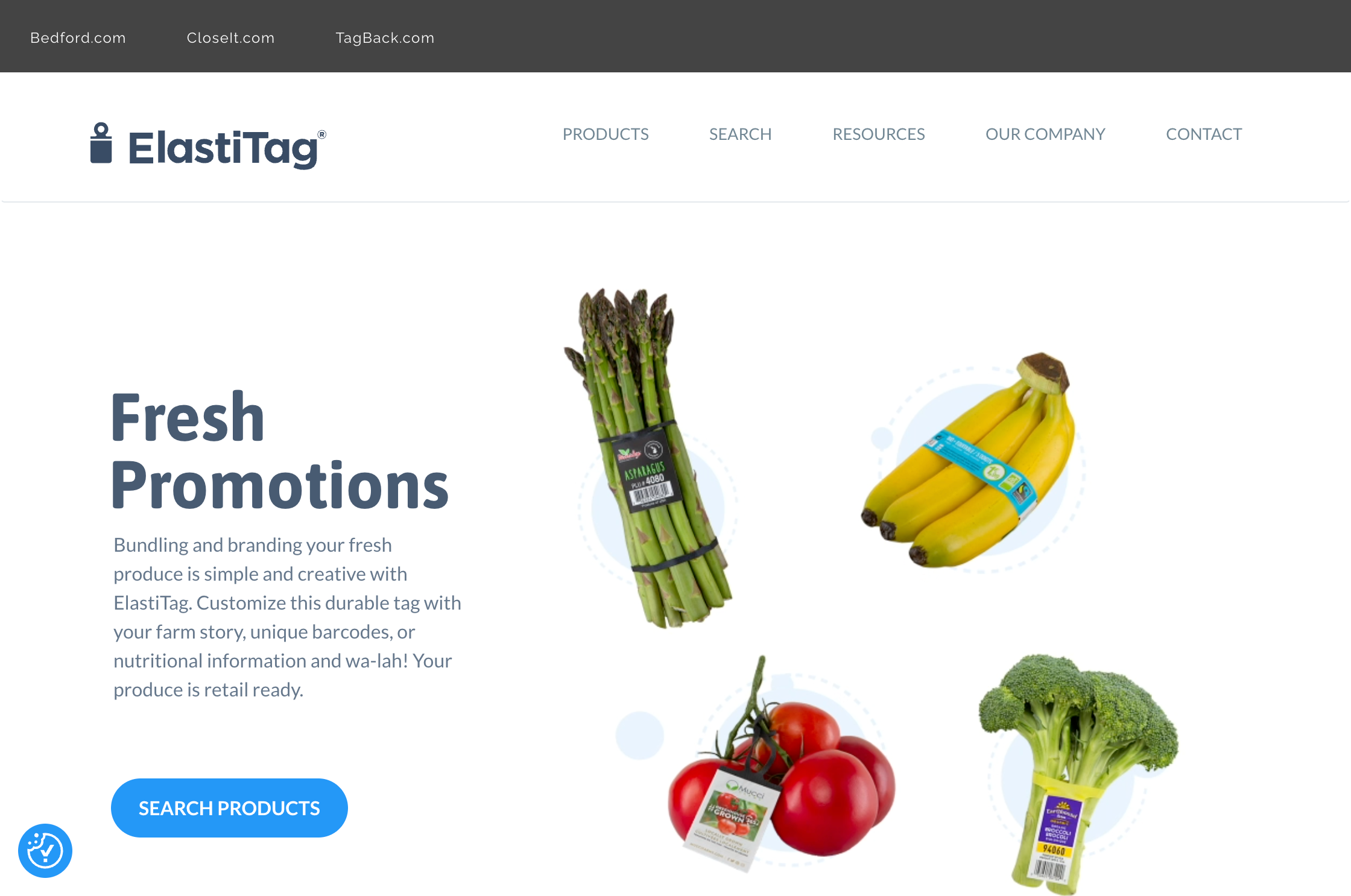
Screen shot of the Elastitag's updated home page at desktop width. Screen shot of the Elastitag's updated home page at mobile width.

Additionally, by depending on Bedford's existing content model, we were able to easily translate design elements to the new Elastitag site.

The outcome.

Our relationship with Bedford continues as ongoing support partners. Now that their content team works within one familiar system — reducing training time and eliminating the context-switching that plagued their previous workflow.

Project results:

  • Consolidated three separate WordPress sites into a single, modern Umbraco CMS, eliminating maintenance overhead and providing Bedford's content team with one unified editorial experience
  • Significantly improved site speed and performance by moving away from plugin-heavy WordPress architecture to a streamlined, custom Umbraco implementation
  • Standardized design and content structure across all three brands (Bedford Industries, Close It, and Tagback) using the Bedford design system as the foundation, ensuring consistency without requiring a full rebrand
  • Established a scalable foundation for growth that reduced training time for content editors, improved accessibility and performance benchmarks, and enabled an ongoing support partnership focused on continuous enhancement

Want to consolidate your web properties without the risk? Our phased approach gives you the research and roadmap you need before committing to implementation.

Our work with Umbraco.

We've built Umbraco sites for financial services, higher education, healthcare, associations, and more.


Related articles.

We’ve been writing and creating things for — and about! — the web for over 20 years, including our thoughts about Umbraco. Check out more articles similar to this one.